
Info

5 Technology Trends You Need to Know to Work in Any Industry

If you’ve been following the news on exciting tech trends like artificial intelligence, then you’re probably aware that emerging technologies are changing the way we work and interact with others. In fact, wi

SSSudarshan SharmaAug 10, 2019
If you’ve been following the news on exciting tech trends like artificial intelligence, then you’re probably aware that emerging technologies are changing the way we work and interact with others. In fact, with things like machine learning and touch commerce becoming increasingly popular across every industry from banking to healthcare, technology is revolutionizing the way we do business and making high-tech approaches an integral part of our lives. We recently sat down with the team at Deloitte to find out how these trends are reshaping the career space. Here are the top five technology trends you need to know to work in any industry.
🔍

1. Internet of Things (IoT)

One of the biggest tech trends to emerge in recent years is the Internet of Things. Simply put, the Internet of Things (abbreviated IoT) is the idea that all technological devices can be connected to the internet and to each other in an attempt to create the perfect marriage between the physical and digital worlds. How will this impact you? It depends on your industry. For example, for those who work in marketing, advertising, media or business management, IOT could provide a wealth of information on how consumers engage with products by tracking their interactions with digital devices. In turn, this data could be used to optimize marketing campaigns and user experiences.

How it’s affecting industries: The really cool thing about IoT is that it’s not only changing the way we do business but also the business models we use to do it. For example, according to Deloitte, flexible consumption models (also known as pay-per-use models) are going to become increasingly more popular across all industries as new customer data becomes available.

2. Machine learning

Another exciting emerging technology is machine learning, which is essentially a computer’s ability to learn on its own by analyzing data and tracking repeating patterns. For example, social media platforms use machine learning to get a better understanding of how you’re connected with those in your social network. They do this by analyzing your likes, shares, and comments and then prioritizing content from your closest connections, serving you that content first.

How it’s affecting industries: In addition to shaping your day-to-day interactions with friends on social media, machine learning is also changing the way companies do business with customers. According to Deloitte, companies like Google are using machine learning on mobile devices which can continue learning even when offline. The result? Machine learning is reshaping the way businesses interact with their customers in a big way by helping them anticipate and meet customer needs more easily.

3. Virtual reality (VR)

Remember watching movies about virtual reality and thinking how cool it would be if it was actually like that in real life? Well, it’s about to be. Although VR has been around since the 1950s until recently the technology wasn’t able to deliver the fully immersive digital experience users have been craving. That’s about to change with recent improvements to both hardware and programming, and the effects are going to be felt across almost every industry from retail to education.

How it’s affecting industries: Virtual reality has been a popular component of video games for several years and this trend is continuing to expand. In addition to video games, VR is likely to affect companies across the board as they adopt the technology to help them engage customers more effectively and optimize their sales and marketing efforts. It’s also a potentially useful tool for learning and is increasingly being adopted by educational organizations.

4. Touch commerce

Being able to buy anything you want with the touch of a finger may have seemed like a fantasy a few years ago, but it’s now a reality. Merging touchscreen technology with one-click shopping, touch commerce allows consumers to buy products easily from their phones. After linking their payment information to a general account and enabling the feature, customers are able to buy everything from clothes to furniture with just a fingerprint.

How it’s affecting industries: According to Deloitte, this is one of the biggest things to hit eCommerce in recent years with purchases of this type expected to increase by 150% this year alone and retailers in almost every industry anticipating an increase in sales directly related to this new technology.

5. Cognitive Technology

Cognitive technology is in the same vein as machine learning and virtual reality except that it’s a broader concept. For example, the cognitive technology umbrella includes things like natural language processing (NLP) and speech recognition. Combined, these different technologies are able to automate and optimize a lot of tasks that were previously done by people, including certain aspects of accounting and analytics.

How it’s affecting industries: Although cognitive technologies have a broad range of applications, Deloitte predicts that the industry sector most affected by this trend initially will be the software sector with 95% of enterprise software companies projected to adopt these technologies by 2020.

With emerging technologies changing professional industries including banking, eCommerce, healthcare, and education, staying up to date on the latest trends will give you a better understanding of your chosen industry and make you a more competitive candidate. Best of all, this knowledge might open up new doors within your field and others.


SS
Written by
Sudarshan Sharma

Contributor at EdTecInfo. Writing about education, technology, and productivity for Nepali readers.

Swipe up, left, or right for the next story
Info

Ncell to Launch Satellite Services in Bhotekoshi Flood-Hit Areas of Rasuwa

Ncell is moving to restore connectivity in flood-battered parts of Rasuwa by rolling out satellite-based telecom services, after the Bhotekoshi floods knocked out dozens of mobile towers and kilometers of fiber infrastru

AAdminSep 10, 2026
Ncell is moving to restore connectivity in flood-battered parts of Rasuwa by rolling out satellite-based telecom services, after the Bhotekoshi floods knocked out dozens of mobile towers and kilometers of fiber infrastructure across the region.

Telecom operator Ncell has begun preparations to bring satellite-based connectivity to areas of Rasuwa still cut off from mobile service following the devastating Bhotekoshi floods. The initiative aims to reconnect communities that have had no telecom access since the disaster struck.

To get the necessary equipment into the affected region, Ncell is arranging chartered flights, since ground access to several of the hardest-hit areas remains difficult. Technical teams are being sent alongside the equipment to begin setup as soon as it arrives on site.

According to the company, roughly 20 locations across Rasuwa remain without any telecom coverage. Ncell has indicated that further details about how the satellite service will be rolled out are expected within the next few days.

The scale of the damage has been significant. The floods destroyed more than 60 kilometers of Ncell's fiber-optic links and knocked out 27 mobile towers spread across Nuwakot, Rasuwa, and Dhading districts. Of those, 24 sites have already been brought back online as repair crews continue working through the affected areas.

Ncell says its technical staff are continuing repair and restoration work around the clock as the company works to bring full connectivity back to the region.

A
Written by
Admin

Contributor at EdTecInfo. Writing about education, technology, and productivity for Nepali readers.

Swipe up, left, or right for the next story
Info

What is SEO and how it works?

What is SEO and how it works? is searched often in google and you can find result like: SEO stands for “Search Engine Optimization.” It means the process of improving your site to increase its visibility

AAdminFeb 25, 2021
What is SEO and how it works? is searched often in google and you can find result like: SEO stands for “Search Engine Optimization.” It means the process of improving your site to increase its visibility for relevant searches. The better visibility your pages have in search results, means you can attract prospective and existing customers to your business. How does SEO work? Search engines such as Google and Bing use bots to crawl pages on the web, going from site to site, collecting information about those pages and putting them in an index. Next, algorithms analyze pages in the index, taking into account hundreds of ranking factors or signals, to determine the order pages should appear in the search results for a given query. Content quality and keyword research are key factors of content optimization, and crawlability and mobile-friendliness are important site architecture factors on SEO. The search algorithms are designed to surface relevant, authoritative pages and provide users with an efficient search experience. Optimizing your site and content with these factors in mind can help your pages rank higher in the search results. Unlike paid search ads, you can’t pay search engines to get higher organic search rankings. Why is SEO important for marketing? SEO is a fundamental part of digital marketing because people conduct trillions of searches every year, often with commercial intent to find information about products and services. Search is often the primary source of digital traffic for brands and complements other marketing channels. Greater visibility and ranking higher in search results than your competition can have a material impact on your bottom line. However, the search results have been evolving over the past few years to give users more direct answers and information that is more likely to keep users on the results page instead of driving them to other websites. Also note, features like rich results and Knowledge Panels in the search results can increase visibility and provide users more information about your company directly in the results.
A
Written by
Admin

Contributor at EdTecInfo. Writing about education, technology, and productivity for Nepali readers.

Swipe up, left, or right for the next story
Info

What is digital marketing?

These days digital marketing is getting popular and many people seems to be searching What is digital marketing?. We can get result like Achieving marketing objectives by applying digital technologies and media is c

AAdminFeb 25, 2021
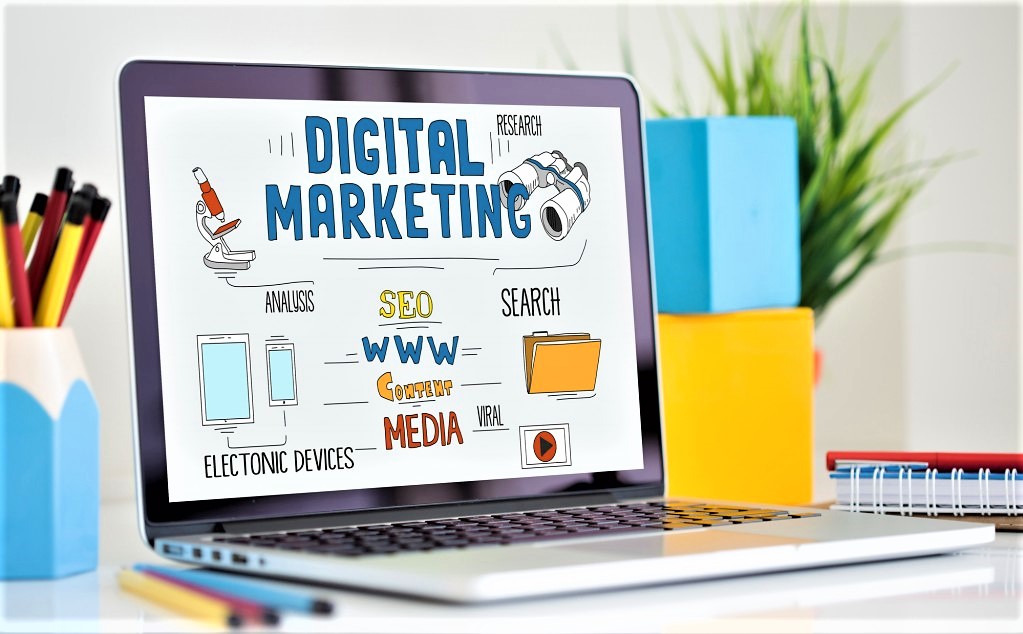
These days digital marketing is getting popular and many people seems to be searching What is digital marketing?. We can get result like Achieving marketing objectives by applying digital technologies and media is called Digital Marketing. This is in conjunction with online communications techniques including the likes of search engine marketing, social media marketing, online advertising, e-mail marketing and partnership arrangements with other websites. These days social media marketing like Facebook, Instagram, YouTube Advertisement (Boosting) are getting popular among us. Digital Marketing means: Identifying – the internet can be used for marketing research to find out customers’ needs and wants Anticipating – the Internet provides an additional channel by which customers can access information and make purchases – evaluating this demand is key to governing resource allocation. Satisfying – a key success factor is achieving customer satisfaction through the appropriate channel, which raises issues such as: is the site easy to use, does it perform adequately, what is the standard of associated customer service and how are physical products dispatched? So, digital marketing is about utilizing digital technology to achieve marketing objectives. There is no essential need for digital to always be separate from the marketing department as a whole, as the objectives of both are the same. However, for now, it remains a useful term because digital requires a certain skill set to utilize digital technology effectively.
A
Written by
Admin

Contributor at EdTecInfo. Writing about education, technology, and productivity for Nepali readers.