
Education

Pokhara University BBA Financial Institutions and Markets Notes: Chapter 2 – Central Banking

1. Define central bank. What are the objectives of central bank? Central bank is a bank that provides financial and banking services for the government of a country and its commercial banking system as well as im

AAshmeeApr 12, 2020
1. Define central bank. What are the objectives of central bank? Central bank is a bank that provides financial and banking services for the government of a country and its commercial banking system as well as implementing the governments monetary policy. The objectives of central bank are: Regulating the economic activities-facilities flow of funds to promote economic activities. Generate adequate employment production and purchasing power-formulate and conduct monetary policy to generate maximum economic benefits. Protecting the national interest-provide cushion to depositors. Correct balance of payment to minimize fiscal deficits and to determine foreign exchange rates enhance foreign exchange earnings through favorable promotion of foreign trade. Maintain sound currency system-keeps inflationary pressures in check and vice versa. 2. What are the objectives of Nepal Rastra Bank? The objectives of Nepal Rastra Bank are: To formulate necessary monetary and foreign exchange policies in order to maintain the stability of price and balance of payment for sustainable development of the country. To promote economic stability and liquidity required in banking and financial sector. To develop a secured, healthy and efficient system of payment. To regulate inspect, supervise and monitor the banking and financial system. To promote entire banking and financial system of the kingdom of Nepal and to enhance its public credibility. 3. Describe the functions of Nepal Rastra Bank. The functions of Nepal Rastra Bank are described below To manage note issue and money in circulation in the economy. To formulate necessary monetary policies in order to maintain price stability and to implement these policies. To act as the banker of commercial banks and financial institutions and function as the lender of the last resort. To act as a banker, an advisor and a financial agent of his majesty’s government. To implement any other necessary functions which the bank has to carry out in order to achieve the objectives of the bank under this Act. 4. What is discount rate, and how a central bank applies discount rate to control money supply? The rate charged by the central bank to commercial bank is called discount rate. The central bank usually undertakes to the banking system and to buy approved securities for meeting the temporary needs of short-term liquidity. This responsibility makes a central bank to act as a lender of last resort. A penal rate of interest is frequently charged in order for mis using facilities. In establishing an appropriate discount rate, the monetary authorities need to pay close attention to market interest rate. A tight monetary policy may need to incorporate a discount rate that is significantly above private sector interest rates or other condition may need to be attached to central bank loans to banks. This ensures a penal cost in conjunction with other tools of monetary policy to ensure a well-balanced package of measures. 5. What is open market operation? Buying and selling of securities to control money supply is called open market operations. They are supplement ta an active public debt policy. In our country, Nepal Rastra Bank has used open market operations are designed. 6. How money supply is adjusted through the discount rate? If the discount rate exceeds market interest rates, for example on bank loans, then this can act as a deceptive in using funds borrowed from the central bank to accumulate reserves as a base on which additional private sector lending can be built. Similarly, if the discount rate is below market rates of interest then it is clearly profitable for the banks to borrow from central bank in order to facilitate the expansion of their lending to private. Hence, expansionary activities are used to lower the discount rate and contractionary activities is used to raise the discount rate. 7. What are the main responsibilities of the central bank board? The main responsibilities of the central bank board are It is balancing of the monetary system in the economic. It serves in different capacities in coordinating the plans, policies and strategies of money supply and its creation. It controls inflation, money supply, price level others: - Foreign currency management - Effective debt management - Valuable advice to the government - Maintaining relationship - Money supply and creation - Measuring leading economic variable 8. What are the main assets and liabilities of central bank? The main assets and liabilities of central bank are: a. Assets of central bank - Securities mainly in the form of government bond. - Foreign exchange reserve which are mainly held in the term of foreign bond issued by foreign government. b. Liabilities of central bank - Currency which is held by the public. - Commercial bank account which is known as reserve, where commercial banks keep their deposits with the central bank. 9. What are the major differences between central bank and commercial bank? The difference between central bank and commercial bank are: Central Bank Commercial Bank It is established under government ownership. It is established under government and private ownership. In a country there is only one central bank. In a country there may be a more number of commercial banks. It is conducted exclusively under government control. It is conducted under central bank’s control.

You can go through this link for Pokhara University BBA Financial Institutions and Markets Notes: Chapter 1 The Role of Financial Institutions and Markets

Please keep on visiting our site for Notes and Solved Questions of of Pokhara University BBA, BCIS and other faculties.

BBA, NOTES, BBA NOTES, POKHARA UNIVERSITY, POKHARA UNIVERSITY SOLVED QUESTIONS, OLD QUESTION COLLECTION

A
Written by
Ashmee

Contributor at EdTecInfo. Writing about education, technology, and productivity for Nepali readers.

Swipe up, left, or right for the next story
Education

SEE Result 2079-80 | Here’s How to Check?

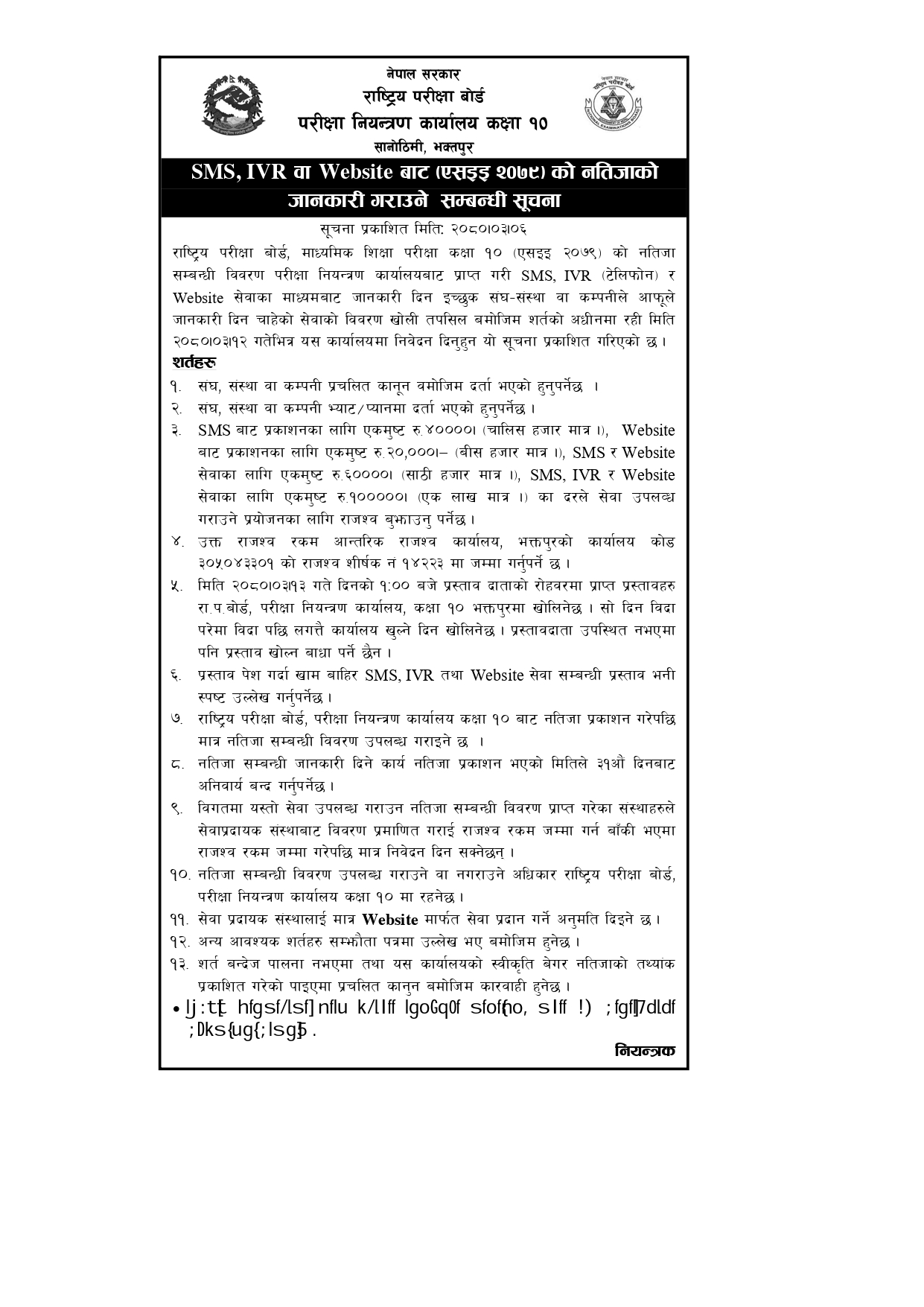
The National Examination Board (NEB) is set to make public the results of the Secondary Education Examination (SEE) for the year 2079 BS. The board is going to publish the results after verifying the internal evalua

AAdminJun 29, 2023
The National Examination Board (NEB) is set to make public the results of the Secondary Education Examination (SEE) for the year 2079 BS. The board is going to publish the results after verifying the internal evaluation done by the school. The Examination Control Office, Class 10, is going to publish the results of SEE Exam 2079 from the Board's website, SMS and IVR. 1. How to Check the SEE Result 2079? SEE Result 2079 Online with Marksheet You can visit following websites to check the results online with your marks: Nepal Telecom: see.ntc.net.np - NTC is one of the most trusted web-pages to find the SEE result. NTC is providing the SEE result for the last five years. To find the result in this site, you need to provide the SEE symbol number and your date of birth (must match with your entrance card). NTC provides the result with a mark sheet. National Examination Board (NEB): see.gov.np , neb.gov.np - This site also provides a result with a mark-sheet. To find the result in this site, you need to provide the SEE symbol number and your date of birth (must match with your entrance card). Kantipur results.ekantipur.com - This is the website by eKantipur. This website also provides the SEE result with a mark sheet. To find the result in this site, you need to provide the SEE symbol number. Ncell: see.ncell.axiatta.com - This is the website by Ncell. This website also provides the SEE result with a mark sheet. To find the result in this site, you need to provide the SEE symbol number. Edusanjal: see.edusanjal.com - This website also provides the SEE result with a mark sheet. To find the result in this site, you need to provide the SEE symbol number. We would recommend you checking your result from above websites, although there are other websites where you can check the SEE results. 2. How to Check the SEE Result 2079 Via SMS? Type SEE Symbol-Number and Send SMS to 35001 : Sparrow SMS is also a very popular and trusted way to find the SEE result. Sparrow provides the result via text to the mobile. If you don’t have access to the internet, it may make you easy to know the SEE result through SMS. Sparrow is also providing SEE results for the past five years. SEE Result 2079 via SMS with Marksheet You can also use SMS to check your result with Marksheet, to check the results of SEE examination by SMS, you need to send SMS to following numbers by typing SEE Symbol No. SMS Services Type SEE Symbol-Number and Send SMS to 1600 : 1600 (NTC - Works for Namaste users only) Example: Type SEE 03296623B and send it to 1600. Type SEE Symbol-Number and Send SMS to 31001 Type SEE Symbol-Number and Send SMS to 35566 Type SEE Symbol-Number and Send SMS to 34949 : 34949 (Easy Services - Works on all network) Type SEE Symbol-Number and Send SMS to 33624 After sending sms you will receive your result within a moment. 3. How to Check the SEE Result 2079 Via Call? Third Way to check result is dialing 1600 from landline phone and following the instructions. SEE Grading System: Letter Grading System – Scores and Grades Achieved Score (in %) Grade Point Grade Explanation of Grade 90 and more 4.0 A+ Outstanding 80 – less than 90 3.6 A Excellent 70 – less than 80 3.2 B+ Very Good 60 – less than 70 2.8 B Good 50 – less than 60 2.4 C+ Satisfactory 40 – less than 50 2.0 C Acceptable 35 – less than 40 1.6 D Basic less than 35 – NG Not Graded Outstanding Has deep and broad knowledge with highly developed critical insight as well as comprehensive and perceptive appreciation of the theoretical or practical subject matter; an exceptional ability to organize, use, analyze and succinctly present subject matter fluently and clearly with extraordinary performance; a significant capacity for original, creative, and logical thinking with superior communication skills. Excellent Has deep and broad knowledge with developed critical insight as well as comprehensive and perceptive appreciation of the theoretical or practical subject matter; an exceptional ability to organize, use, analyze and succinctly present subject matter fluently and clearly with exemplary performance; a significant capacity for original, creative, and logical thinking with advanced communication skills. Very Good Has broad knowledge with developed insight as well as comprehensive and independent appreciation of the theoretical or practical subject matter; a special ability to organize, use, analyze and succinctly present subject matter clearly with a high level of performance; a highly developed capacity for original, creative, and logical thinking with sound communication skills. Good Has decent knowledge with developed insight as well as comprehensive and good appreciation of the theoretical or practical subject matter; an ability to organize, use, analyze and succinctly present subject matter with respectable performance, a developed capacity for original, creative, and logical thinking with reasonable communication skills. Satisfactory Has adequate knowledge with developing insight as well as comprehensive and reasonably good appreciation of the theoretical or practical subject matter, an ability to organize, use, analyze and succinctly present subject matter with blameless performance; some capacity for original, creative, and logical thinking with sufficient communication skills. Acceptable Has sufficient knowledge with developing insight as well as comprehensive and acceptable understanding of the theoretical or practical subject matter; an ability to organize, use, analyze and present subject matter with guiltless performance; limited capacity for original, creative, and logical thinking with acceptable communication skills. Basic Has some knowledge with developing insight as well as comprehensive and partial understanding of the theoretical or practical subject matter; limited ability to organize, use, analyze and present subject matter with guiltless performance; limited capacity for original, creative, and logical thinking with minimal participation in communication skills. Not Graded Has less knowledge with incomplete insight as well as comprehensive and negligible understanding of the theoretical or practical subject matter; deficient ability to organize, use, analyze and present subject matter; very limited capacity for original, creative, and logical


A
Written by
Admin

Contributor at EdTecInfo. Writing about education, technology, and productivity for Nepali readers.

Swipe up, left, or right for the next story
Education

NEB Grade 12 Examination Routine 2080

NEB has published the examination routine for Grade 12; the examination will start on Baisakh 26, 2080, and will conclude on Jestha 5, 2080. According to the routine published by National Examination Board (NEB), the

AAdminMar 5, 2023
NEB has published the examination routine for Grade 12; the examination will start on Baisakh 26, 2080, and will conclude on Jestha 5, 2080. According to the routine published by National Examination Board (NEB), the examination time is 8 AM to 11 AM. View the official notice for the Grade 12 Examination 2080.
🔍
🔍
A
Written by
Admin

Contributor at EdTecInfo. Writing about education, technology, and productivity for Nepali readers.

Swipe up, left, or right for the next story
Education

Registration Opens for Class 9 Students 2079

Registration Opens for Class 9 Students 2079: The National Examination Board (NEB) in Nepal has opened the registration form for class 9 students who wish to participate in the regular Secondary Education Examination (SE

AAdminMar 4, 2023
Registration Opens for Class 9 Students 2079: The National Examination Board (NEB) in Nepal has opened the registration form for class 9 students who wish to participate in the regular Secondary Education Examination (SEE) of 2080. Students who are regularly studying in class 9 in general, traditional Sanskrit/Vedvidyashram/Gurukul/Madrasa/Gonpa, and technical streams will need to fill out the form between February 19 and May 15, during the academic session of 2079. Registration Process for SEE Exam 2080: To register for the regular SEE exam for the academic session 2079, students must have passed the annual examination of class 8th or 19th in the marking system with a minimum D+ grade and a minimum D grade in the year 2078 in compulsory subjects. The registration form is available from November 19, 2079, to January 15, 2080. The cost of the registration form is Rs. 300, and for students unable to register within the given timeframe, they can submit the amount along with late fees of Rs. 600 through the school they are studying at. Important Notes: It is essential to note that students should fill out the registration form only from the school where they are studying regularly. Double registration can lead to the cancellation of the exam, and the responsible person will be accountable. Schools should verify the name, date of birth, and name of the mother and father of the students studying regularly in their schools regardless of the difference. The Education Development and Coordinating Unit will send an online entry to schools for enrollment till the end of Ashad 2080, and the form must be submitted along with a copy of the grade sheet, birth certificate (attested by the headmaster), recent passport-size photograph in school uniform, and revenue return to the related education development and coordination unit.
A
Written by
Admin

Contributor at EdTecInfo. Writing about education, technology, and productivity for Nepali readers.